
A firewall can stop an attack. But what builds the people, research, and companies capable of creating the next firewall?
As Pakistan moves deeper into a digital economy, cybersecurity is no longer simply a technical issue. Banking, education, communication, government services, and businesses increasingly depend on digital systems. Protecting these systems is important, but developing the knowledge and technology needed to protect them is equally important.
This is where the cybersecurity ecosystem around the National Aerospace Science and Technology Park (NASTP) becomes particularly significant. Rather than viewing cybersecurity only as a defensive requirement, NASTP offers the possibility of treating it as a field of research, innovation, entrepreneurship, and skilled employment.
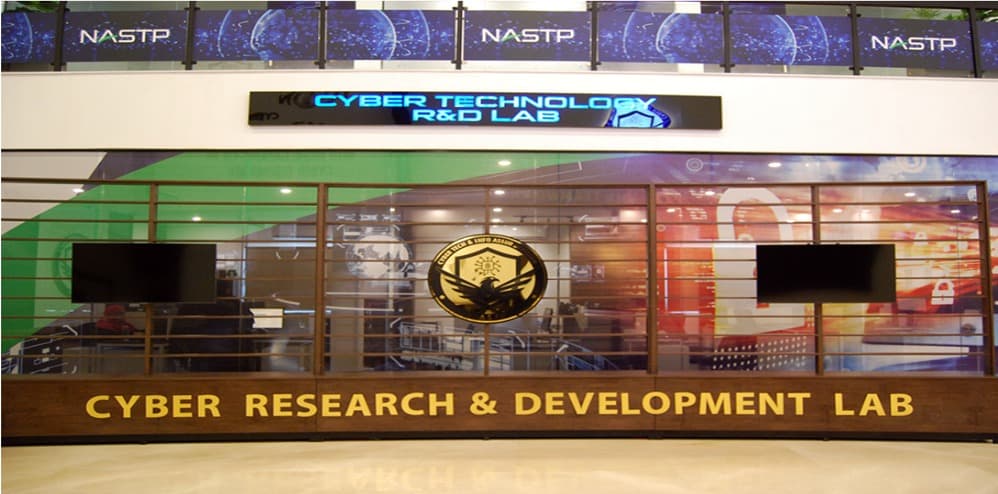
NASTP describes its technology ecosystem as a platform connecting industry, academia, and government while supporting research, innovation, and development across areas including IT and cyber technologies. Its Alpha facility in Rawalpindi includes capabilities related to cyber, IT, computing, software development, and artificial intelligence.
The larger question, therefore, is not simply how Pakistan can protect itself from cyber threats. It is how Pakistan can develop the knowledge, talent, and technology needed to create its own cybersecurity solutions.
During the PYP visit to NASTP, this broader connection between technology, education, and innovation became particularly interesting. A laboratory, a university, a technology company, and a student may appear to be separate parts of the system, but their real value emerges when they interact. This makes NASTP more than a technology facility. It can serve as an ecosystem where knowledge moves from classrooms and research environments towards practical solutions.
From Cybersecurity Defence to Cybersecurity Industry
Cybersecurity is often discussed through the language of attacks, vulnerabilities, and protection. That perspective is necessary, but incomplete.
A strong cybersecurity ecosystem also requires researchers who understand emerging threats, developers who can build secure systems, universities that produce specialised graduates, entrepreneurs who can turn ideas into products, and organisations willing to test and adopt those solutions.
NASTP’s model is relevant because its stated purpose is built around connecting different parts of the technology ecosystem. Its Alpha site in Rawalpindi hosts capabilities related to cyber, IT, computing, artificial intelligence, and software development. It also has links with specialised academic and incubation initiatives, including Air University’s National Centre for Cyber Security and Siber Koza.
This combination matters. Research becomes more valuable when it can reach industry. Education becomes more practical when students can work around real technology ecosystems. Entrepreneurship becomes stronger when startups have access to technical knowledge, mentors, and potential partners.
The real opportunity lies in connecting these pieces.
Siber Koza: Where Cyber Ideas Meet Entrepreneurship
One of the most interesting elements of this ecosystem is Siber Koza.
Siber Koza describes itself as an entrepreneurship platform designed to help technological ideas develop into innovative business ideas by connecting them with resources, professionals, and entrepreneurs. Its Islamabad initiative has a particular focus on cybersecurity and artificial intelligence.
Its connection with NASTP and Air University is especially relevant for students. According to Air University documentation, an MoU between NASTP, Air University, and Siber Koza was signed in 2023, followed by the establishment of a Siber Koza Innovation Centre at Air University. The initiative includes training and mentorship in areas such as cybersecurity, IT, artificial intelligence, and robotics, while also supporting entrepreneurship and startup development.
Siber Koza’s platform describes its innovation centres as environments where young people can develop projects and demonstrate their technical skills. Its Islamabad presence is connected with the wider technology ecosystem involving Air University and NASTP.
This creates an important bridge.
A student may begin with a classroom problem, turn it into a technical project, receive mentorship, test the idea, and eventually explore whether it can become a product or service.
That journey is often where innovation either happens or disappears.
The Talent Behind the Technology
No cybersecurity ecosystem can be stronger than the people who build and operate it.
Pakistan has a large population of young technology students, but producing graduates and developing specialised technological capability are not exactly the same thing. Cybersecurity requires continuous learning because technologies, vulnerabilities, and attack methods continue to evolve.
NASTP’s ecosystem can contribute to this by bringing education closer to research and industry. Air University, for example, has specialised cybersecurity education and has continued to expand its involvement in cybersecurity research, education, and capacity building.
This suggests an important direction for Pakistan. Cybersecurity education should not remain limited to lectures and examinations. Students need opportunities to solve realistic problems, collaborate across disciplines, learn from practitioners, and understand how technical solutions move from research environments into real organisations.
For a country building its digital future, talent is not a side component of cybersecurity. It is the infrastructure behind it.
From Security Cost to Economic Opportunity
There is another dimension to this discussion.
Cybersecurity is usually seen as something organisations spend money on because they have to. But cybersecurity technology can also become an area of innovation and economic activity.
NASTP Alpha positions itself around a broad technology ecosystem that includes cyber, IT, artificial intelligence, software development, and computing. The Special Technology Zones Authority also identifies NASTP Alpha as an operational high technology ecosystem involving areas such as aerospace, cyber, and emerging technologies.
The opportunity is to move further along the value chain.
Instead of only adopting cybersecurity products developed elsewhere, Pakistan can encourage more local research, secure software development, cyber tools, testing services, training platforms, and specialised technology startups.
This does not mean every cybersecurity problem needs a Pakistani solution. It means that where local expertise can produce useful and competitive solutions, the ecosystem should make it easier for those solutions to move from an idea to a tested product.
That is where NASTP can play a distinctive role.
Opportunities and Challenges
The potential is significant, but building a strong cybersecurity ecosystem also requires addressing practical challenges.
One challenge is the gap between academic knowledge and practical experience. Students may understand concepts theoretically but have limited exposure to real-world cybersecurity problems. Stronger university-industry collaboration can help reduce this gap.
Another challenge is the movement of research towards commercialisation. A technically strong university project can remain only a project if there is no pathway towards mentorship, testing, funding, or market development.
There is also the challenge of maintaining trust and security. Cybersecurity initiatives must operate responsibly, particularly when dealing with sensitive information and systems. Training environments should therefore use controlled and simulated scenarios rather than exposing real critical infrastructure to unnecessary risks.
These challenges also point towards opportunities. A well-connected ecosystem can turn students into researchers, researchers into entrepreneurs, and promising prototypes into useful technologies.
What NASTP Can Build Next
The next stage should focus on turning connections into repeatable pathways.
Create a research-to-startup pathway for cybersecurity: University projects with practical potential could be connected to mentors, testing environments, and incubation support so that promising research does not end with a final year project.
Establish regular cyber challenge environments: Students and young researchers could work on simulated problems involving secure software, digital forensics, network defence, and emerging technologies. Such environments would develop practical skills without exposing sensitive systems.
Strengthen university-industry collaboration: Universities can provide research and talent, while technology organisations can provide real-world problems, mentorship, and opportunities for testing solutions. NASTP’s emphasis on industry, academia, and government collaboration provides a foundation for this model.
Develop an export-oriented mindset: Pakistani cybersecurity startups should not be encouraged only to solve local problems. From the beginning, products can be developed with international standards, usability, scalability, and global markets in mind.
Together, these steps can help transform cybersecurity from a field centred mainly on protection into one that also produces knowledge, products, businesses, and skilled professionals.
Conclusion
The most important thing about a cybersecurity ecosystem is not the firewall, the server, or even the software. It is the ecosystem around them.
NASTP already brings together elements that can support this ecosystem: research and development, technology companies, academic institutions, incubation, training, and specialised work in cyber and IT. Its Alpha site and its collaboration with initiatives such as Siber Koza show how cybersecurity can exist at the intersection of research, education, and entrepreneurship.
The next challenge is to make those connections produce more visible outcomes: stronger research, practical student projects, scalable startups, specialised talent, and technologies capable of competing beyond Pakistan.
A firewall protects a network. An ecosystem builds the people who design what comes next. For Pakistan, that may be the bigger cybersecurity opportunity at NASTP.
References:
Air University. (2023). Research centre on environmental sustainability. Air University.
National Aerospace Science and Technology Park. (n.d.-a). National Aerospace Science and Technology Park. NASTP.
National Aerospace Science and Technology Park. (n.d.-b). NASTP Alpha. NASTP.
Special Technology Zones Authority. (n.d.). NASTP Alpha. STZA.
Tayyaba Asim - Member, Pakistan Youth Parliament, BS Computer Science Student